
Determining the right amount to set aside each month is one of the most significant hurdles in personal finance-rule)). Many people feel overwhelmed by the choice between enjoying their paycheck today and securing their future tomorrow. However, finding your ideal monthly savings rate isn't about picking a random number; it is about creating a personalized budget strategy that aligns with your specific life stage and aspirations.
Whether you are saving for a first home, building an emergency fund, or planning for retirement, understanding the mechanics of financial goals planning will help you move from financial stress to total control.
Understanding the Monthly Savings Rate
Your monthly savings rate is the percentage of your take-home pay (net income) that you redirect toward savings, investments, or debt overpayment. While a dollar amount is helpful for short-term tracking, the percentage is the most accurate metric of your financial health.
For example, if you earn $5,000 per month after taxes and save $1,000, your savings rate is 20%. This metric is powerful because it scales with your income. As you earn more, maintaining or increasing this percentage ensures you avoid "lifestyle creep," where your spending rises as fast as your salary.
The 50/30/20 Rule: A Proven Budget Strategy
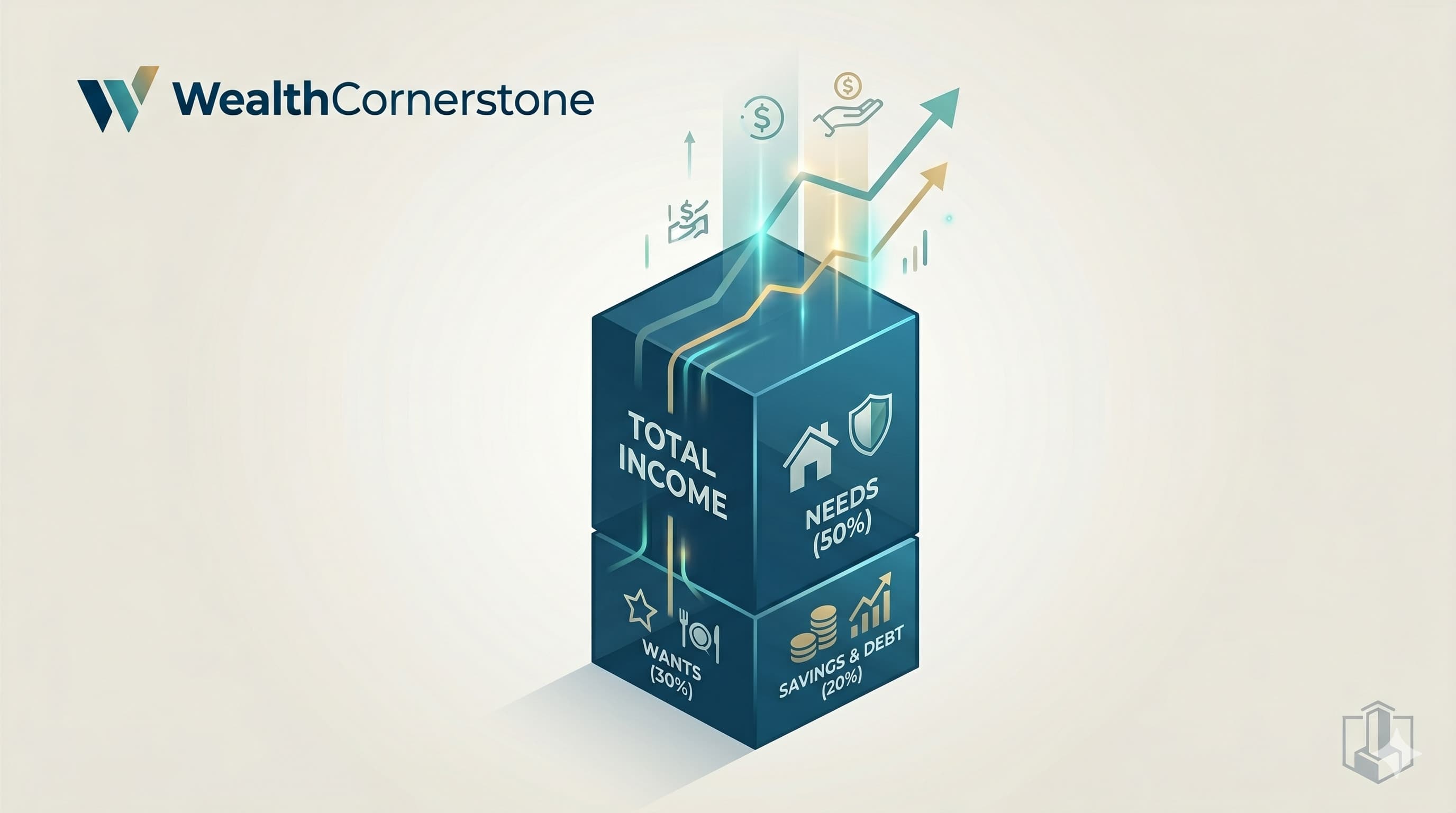
One of the most effective frameworks for beginners is the 50/30/20 rule. This method simplifies your finances by dividing your after-tax income into three distinct buckets:
- 50% for Needs: This covers essential expenses like rent or mortgage, utilities, groceries, insurance, and minimum debt payments.
- 30% for Wants: This is your discretionary spending, including dining out, streaming subscriptions, hobbies, and travel.
- 20% for Savings and Debt Repayment: This is the "gold standard" for a healthy monthly savings rate. This portion goes toward your emergency fund, retirement accounts, and extra payments on high-interest debt.
By following this budget strategy, you ensure that your future self is prioritized without making your current life feel restrictive.
Financial Goals Planning: Short-Term vs. Long-Term
To decide exactly how much to save, you must categorize your objectives. Not all goals are created equal, and they require different saving "vehicles" and timelines.
Short-Term Goals (0–3 Years)
These are goals that require high liquidity and low risk. Since you need the money soon, you shouldn't put it in the stock market where it might lose value temporarily.
- Emergency Fund: Aim for 3–6 months of essential living expenses.
- Sinking Funds: Small buckets of money for predictable costs like car repairs, holiday shopping, or annual insurance premiums.
- Vacation: Saving for a specific trip within the next year.
Long-Term Goals (5+ Years)
These goals benefit from the power of compound interest. Because the timeline is longer, you can afford to invest these funds in assets like stocks or real estate.
- Retirement: Contributing to a 401(k) or IRA.
- Home Ownership: Saving for a down payment.
- Education: Funding a 529 plan for a child’s college tuition.
Goal Breakdown Comparison
| Goal Type | Recommended Timeline | Best Account Type | Risk Level |
|---|---|---|---|
| Emergency Fund | Immediate | High-Yield Savings (HYSA) | Very Low |
| Home Down Payment | 2–5 Years | HYSA or CDs | Low |
| Retirement | 10–30 Years | 401(k), IRA, Brokerage | Moderate to High |
| New Car | 1–3 Years | Savings Account | Low |
4 Steps to Calculate Your Personal Savings Target
If the 20% rule doesn't feel right for your current situation, you can use a "bottom-up" approach to financial goals planning. This method ensures every dollar has a specific purpose.
- Audit Your Current Cash Flow: Review your bank statements from the last three months to see where your money is actually going. Subtract your "needs" from your net income.
- Assign a Value to Each Goal: Determine exactly how much you need for your goals. For example: "I need $10,000 for a house down payment in two years."
- Determine the Monthly Cost: Divide the total amount by the number of months you have to reach it. For the $10,000 goal over 24 months, you need to save $417 per month.
- Automate the Process: Set up an automatic transfer from your checking account to your savings or investment accounts the day after you get paid. This "pays you first" and removes the temptation to spend the money.
Factors That Influence Your Savings Targets
Your monthly savings rate isn't static; it should evolve as your life changes. Several variables may require you to adjust your budget strategy:
- Debt Load: If you have high-interest credit card debt (usually 15% APR or higher), it is often better to prioritize debt repayment over aggressive saving, as the interest you save is a guaranteed return.
- Cost of Living: If you live in a high-cost area, your "Needs" bucket might consume 60% of your income. In this case, you may need to reduce your "Wants" to 20% to keep your savings at 20%.
- Employer Matching: If your employer offers a 401(k) match, this is essentially a 100% return on your investment. Always aim to save at least enough to get the full match before prioritizing other goals.
- Age and Time: If you start saving for retirement in your 20s, a 15% rate might be sufficient. If you start in your 40s, you may need to save 30% or more to catch up.
Common Mistakes to Avoid
- Saving Only "What is Left": If you wait until the end of the month to save, you will likely find that the money has disappeared into discretionary spending.
- Neglecting the Emergency Fund: Never invest your last dollar. Without a liquid safety net, one car breakdown or medical bill could force you to take on high-interest debt.
- Ignoring Inflation: For long-term goals like retirement, remember that $100 today will buy less in 20 years. This is why investing is crucial—it helps your money grow faster than the cost of living.
Conclusion
Determining how much to save each month is a balance of logic and lifestyle. While the 20% monthly savings rate is an excellent benchmark, the best budget strategy is the one you can actually stick to. By engaging in consistent financial goals planning and adjusting your contributions as your income grows, you can build a secure future without sacrificing your current quality of life. Start small if you have to, but start today.
FAQ
Q: Is 10% of my income enough to save for retirement?
A: While 10% is better than nothing, most financial experts suggest aiming for 15% of your gross income for retirement to ensure you can maintain your lifestyle after you stop working.
Q: Where should I keep my short-term savings?
A: Short-term savings should be kept in a High-Yield Savings Account (HYSA). These accounts offer much higher interest rates than traditional brick-and-mortar banks while keeping your money safe and accessible.
Q: What should I do if I can't afford to save 20% right now?
A: Start with a percentage that feels manageable, even if it’s just 1% or 5%. The habit of saving is more important than the amount when you are first starting; you can increase the percentage by 1% every few months as you optimize your spending.